Original · GridDigest
Qcells begins solar cell production at Georgia's 3.3GW facility
By GridDigest Editorial · June 13, 2026 · synthesized from 5 sources
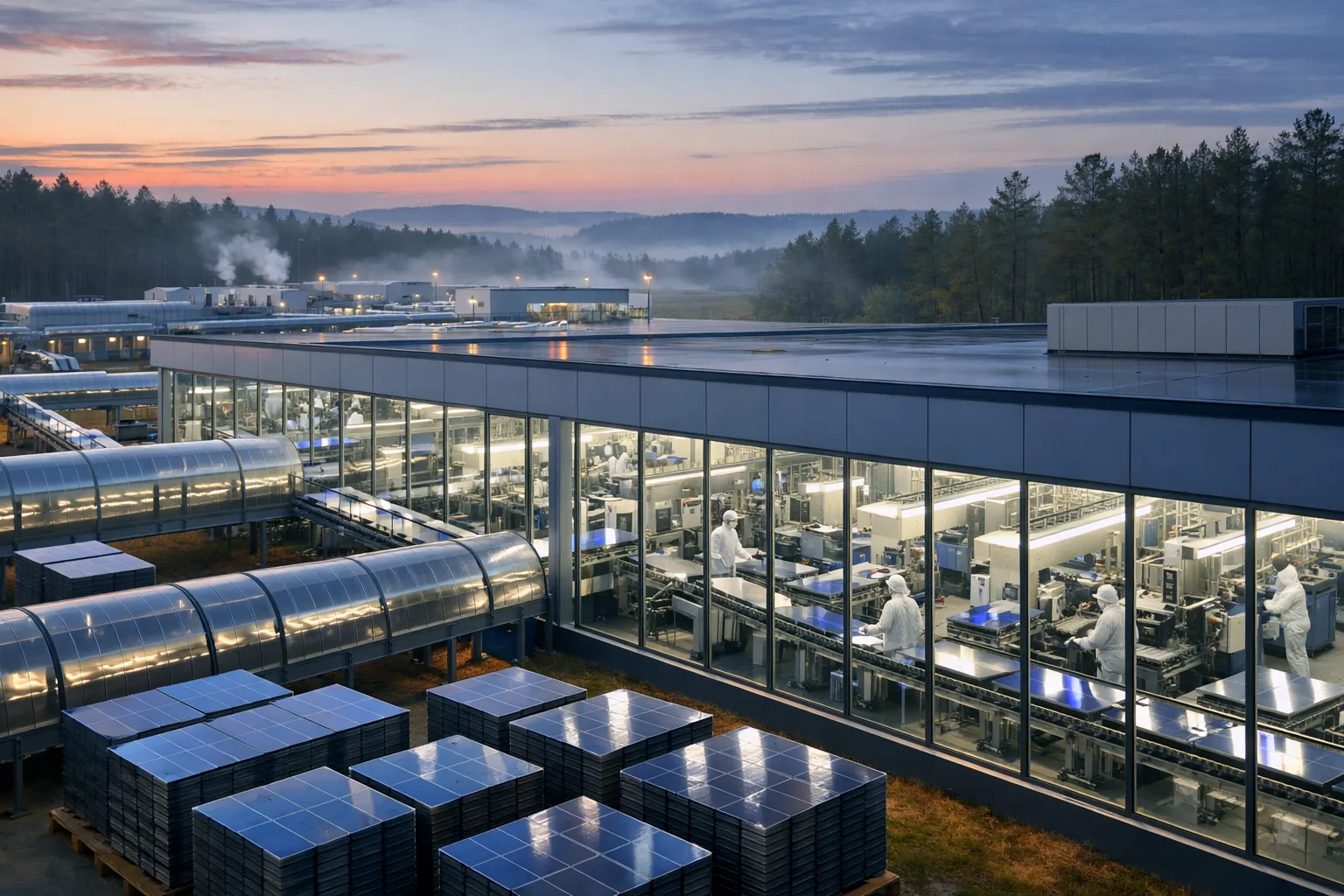
Qcells has started manufacturing silicon solar cells at its vertically integrated Cartersville, Georgia factory, the largest solar cell facility in the US. The $2.5 billion investment will reach full production by Q3 2026 and marks the first fully integrated silicon solar panel manufacturing site in the country.
Qcells has launched commercial production of silicon solar cells at its Cartersville, Georgia campus, marking a significant milestone for domestic solar manufacturing and the broader U.S. clean energy supply chain.
Largest Solar Cell Factory in U.S. History
The Cartersville facility is already the largest solar cell manufacturing plant in the United States, and the company expects it to extend that distinction further as operations scale up. With a planned capacity of 3.3 gigawatts, the factory is on track to reach full production by the third quarter of 2026. The launch effectively doubles existing U.S. capacity for solar cell manufacturing, addressing a longstanding gap in the domestic supply chain that has left American installers heavily dependent on imported components.
A Fully Integrated U.S. Solar Campus
What sets the Cartersville site apart from other domestic solar facilities is its vertical integration. The campus already assembles finished solar panels, and solar cell production is now underway. Qcells also plans to add manufacturing of silicon ingots and wafers at the same location, which would make it the only fully integrated silicon solar panel production site in the United States. That means the facility will eventually handle nearly every stage of the manufacturing process—from raw silicon processing through to completed panels—under one roof on American soil.
A $2.5 Billion Investment
Qcells has committed approximately $2.5 billion to the Cartersville campus overall. The scale of that investment reflects both the strategic importance the company places on U.S. manufacturing and the role that federal policy, including domestic content incentives tied to the Inflation Reduction Act, has played in encouraging solar supply chain build-out on American soil. The facility represents one of the largest single manufacturing investments in the U.S. solar sector to date.
Supply Chain Implications
The start of cell production at Cartersville comes as the U.S. power sector has continued to set records for new solar installations. For five consecutive years, solar has ranked among the leading sources of new electricity generation capacity added to the grid. Despite that installation boom, domestic manufacturing of the core components—cells, wafers, and ingots—has lagged far behind demand, with the majority of supply sourced from overseas. The Qcells expansion directly targets that vulnerability by anchoring a greater share of the supply chain within U.S. borders. Full-scale operation of the integrated campus by mid-2026 would represent a meaningful step toward reducing that structural dependence on imports.
Sources (5)
Methodology: This article was synthesized from five source reports covering the same Qcells manufacturing announcement, drawing on complementary details across all sources to produce a unified account.