Original · GridDigest
GM partners with Peak Energy on sodium-ion grid storage batteries
By GridDigest Editorial · June 13, 2026 · synthesized from 5 sources
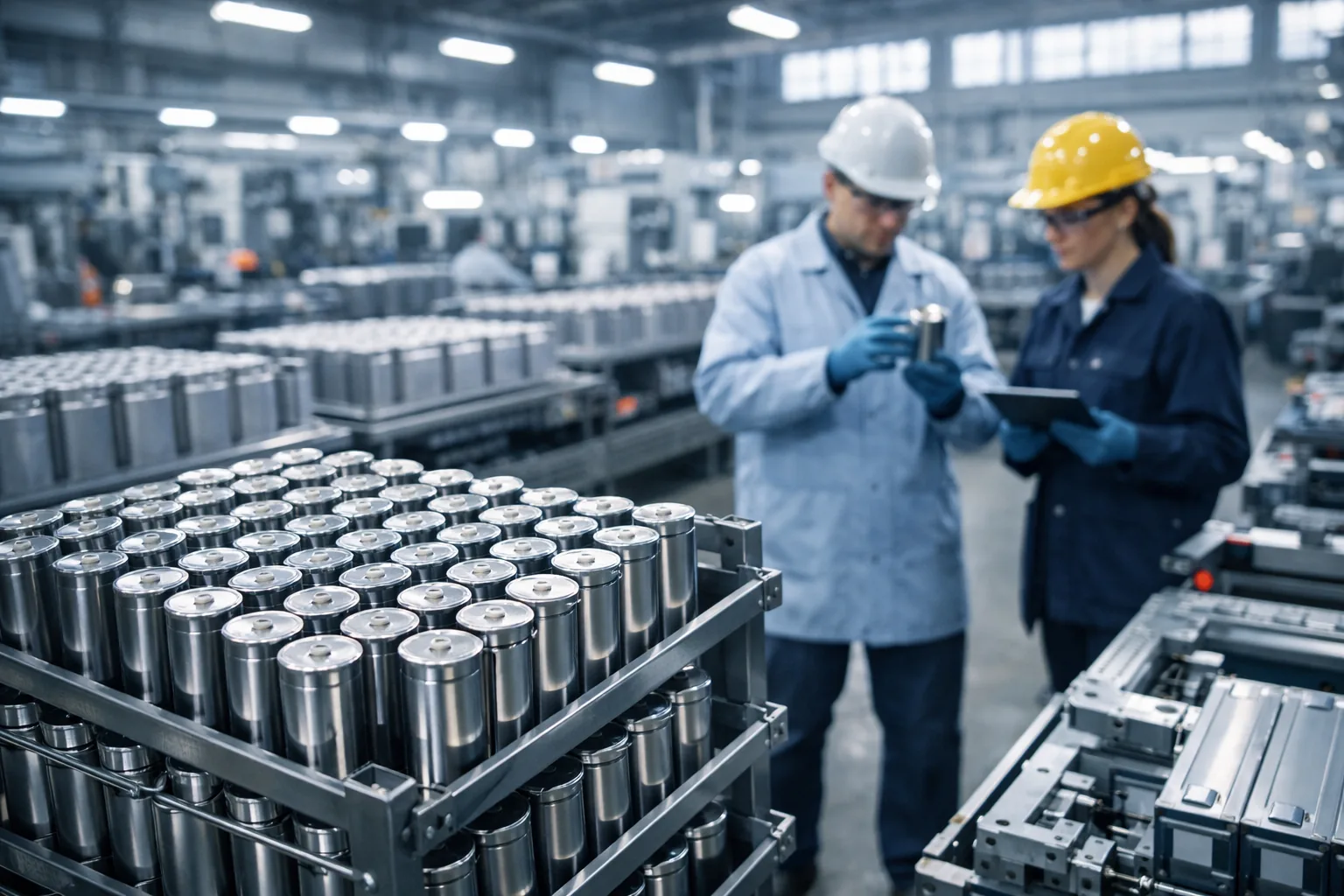
General Motors will develop and manufacture sodium-ion battery cells for Peak Energy's grid-scale energy storage systems, with GM retaining exclusive manufacturing rights. The partnership targets utility-scale storage applications rather than electric vehicles.
General Motors has announced a partnership with sodium-ion battery startup Peak Energy to develop and deploy battery cells targeting the grid-scale energy storage market, marking a notable expansion of the automaker's footprint beyond electric vehicles and into stationary storage infrastructure.
A Strategic Bet on Sodium-Ion Chemistry
Under the agreement, GM will develop sodium-ion battery cells at its Michigan battery laboratories and retain exclusive manufacturing rights over the resulting product. Peak Energy will then incorporate those cells into its own proprietary battery energy storage systems intended for utility and grid-scale applications. GM Ventures is also making a strategic financial investment in Peak Energy as part of the arrangement.
The partnership is a deliberate pivot away from lithium-ion chemistry for grid storage purposes. Unlike the lithium-based cells that power GM's electric vehicle lineup, sodium-ion technology relies on sodium, an abundant and widely available element that does not carry the same supply-chain constraints or geopolitical sourcing concerns associated with lithium, cobalt, and other critical minerals. Proponents of sodium-ion argue the chemistry can deliver cost and resilience advantages in stationary applications where energy density requirements are less stringent than in mobile platforms.
Grid Storage, Not Electric Vehicles
A key distinction in the announcement is that the sodium-ion cells being developed through this partnership are not intended for GM's passenger vehicle products. The cells are designed exclusively for grid-scale energy storage projects, placing GM in a market segment that has historically been dominated by dedicated battery manufacturers and independent storage developers rather than automakers.
By retaining exclusive manufacturing rights over the cell design, GM positions itself as a supplier into the stationary storage market rather than simply a capital backer. Peak Energy, for its part, brings system integration expertise and a commercialization pathway for the cells in energy storage deployments. The companies described the arrangement as one that would advance domestic battery manufacturing capability and strengthen American competitiveness in grid storage technology.
Vehicle-to-Grid Ambitions Run in Parallel
Alongside the sodium-ion announcement, GM has separately been pressing utilities and grid operators to accelerate adoption of vehicle-to-grid technology, commonly referred to as V2G. That push represents a complementary but distinct strategy: rather than developing new hardware for the grid, V2G seeks to turn GM's existing and future fleet of electric vehicles into distributed grid resources capable of supplying power back to the network during periods of high demand or stress.
Together, the sodium-ion storage partnership and the V2G advocacy effort outline a broader grid strategy from an automaker that has historically been evaluated almost entirely on vehicle production metrics. The two approaches address different time scales and infrastructure layers — dedicated grid-scale storage for bulk capacity needs, and bidirectional EV charging for distributed, demand-responsive applications.
Industry Context
The move into grid-scale storage via sodium-ion chemistry reflects wider industry momentum. Battery developers and researchers have accelerated sodium-ion work in recent years as a potential complement or partial alternative to lithium-ion systems in applications where weight and volumetric energy density are secondary to cost and material availability. Several manufacturers in Asia have already begun limited commercial deployment of sodium-ion systems, while North American development has lagged.
GM's entry — backed by its established battery research infrastructure in Michigan — could lend manufacturing scale and credibility to sodium-ion's commercial prospects in the United States. Whether the chemistry can compete on total cost of ownership with increasingly mature lithium iron phosphate systems, which currently dominate the grid storage market, remains an open question that commercial deployments through Peak Energy's pipeline may begin to answer.
Sources (5)
- cleantechnica.com ↗
- renewableenergyworld.com ↗
- electrek.co ↗
- solarpowerworldonline.com ↗
- energy-storage.news ↗
Methodology: This article was synthesized from five source reports covering the same GM–Peak Energy sodium-ion battery partnership announcement, cross-referenced to confirm consistent facts and note role distinctions.