Original · GridDigest
Study: Perovskite tandem solar in agrivoltaics cuts emissions and water use
By GridDigest Editorial · June 19, 2026 · synthesized from 3 sources
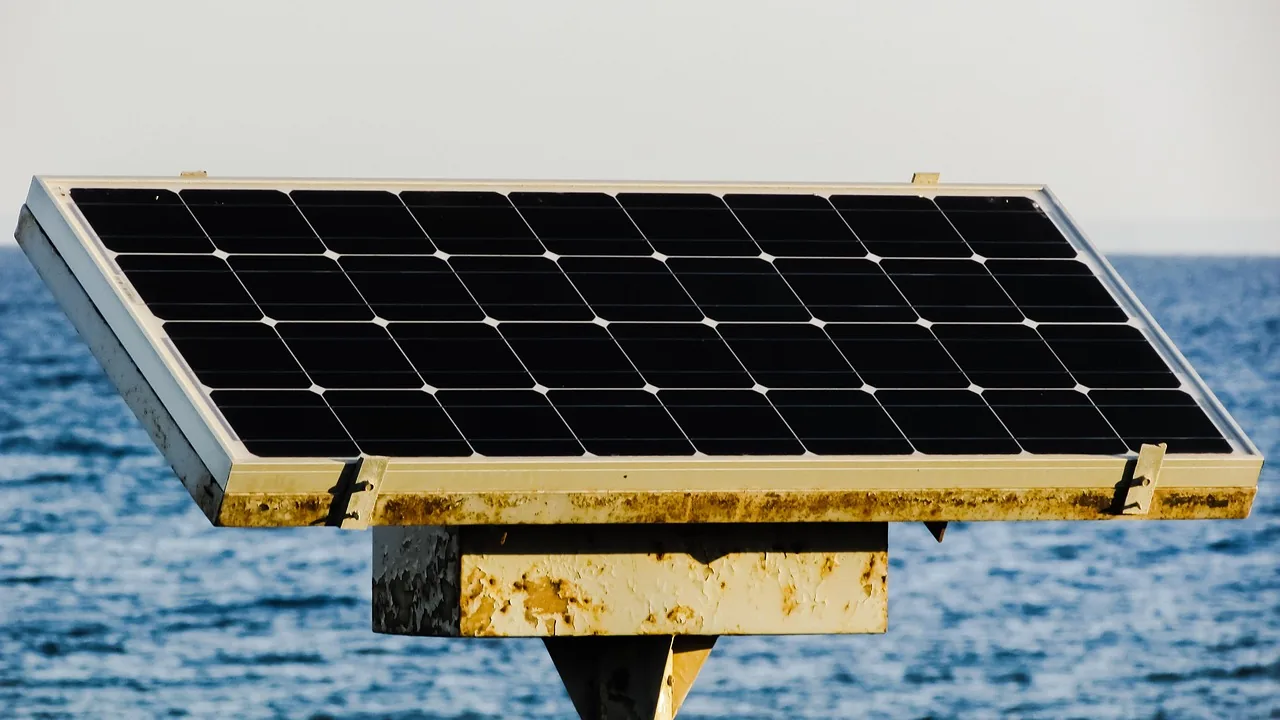
Researchers found that perovskite–silicon and perovskite–perovskite tandem solar integrated with lettuce farming across major US regions could reduce irrigation demand and greenhouse gas emissions. The systems could potentially offset up to 30.9 million tons of CO₂ and save 8.4 billion cubic meters of water annually un
A new life-cycle analysis of agrivoltaic lettuce production finds that pairing advanced perovskite-based tandem solar panels with farmland could dramatically reduce both greenhouse gas emissions and water consumption compared with conventional agricultural and energy practices across major United States growing regions.
Study Scope and Methodology
Researchers conducted a "farm-to-fork" life-cycle assessment examining the environmental impacts of agrivoltaic systems — installations where solar panels and food crops share the same land — specifically for lettuce cultivation. The analysis compared two types of next-generation tandem photovoltaic technologies, perovskite–silicon and perovskite–perovskite configurations, against conventional silicon PV as a baseline. The geographic scope spanned multiple major US growing regions, allowing the researchers to account for regional variation in climate, grid electricity mix, and irrigation requirements.
Key Environmental Findings
The study's headline figures point to substantial potential benefits at scale. Under favorable conditions, widespread deployment of agrivoltaic systems using tandem perovskite PV could offset up to 30.9 million tons of carbon dioxide equivalent annually — a figure that reflects both avoided grid emissions from solar electricity generation and reductions in agricultural energy use. On the water side, the analysis projects savings of approximately 8.4 billion cubic meters of irrigation water per year, a notable finding given that conventional lettuce production is highly water-intensive and that several key US growing regions face persistent water scarcity challenges.
The partial shading provided by solar panels mounted above crops is central to the water savings outcome. By moderating direct solar exposure on plant canopies and soil surfaces, agrivoltaic configurations can meaningfully suppress evapotranspiration, lowering the volume of irrigation water crops require. This microclimate effect, combined with on-site renewable electricity generation, underpins the dual environmental benefit the researchers identified.
Tandem PV Versus Conventional Silicon
A key dimension of the analysis involves how perovskite-based tandem technologies compare with standard silicon panels in the agrivoltaic context. Tandem cells, which stack two or more light-absorbing layers to capture a broader portion of the solar spectrum, generally achieve higher conversion efficiencies than single-junction silicon modules. In agrivoltaic settings, where panel placement and spacing must balance electricity output with sufficient light transmission to crops below, higher efficiency panels can deliver greater energy yield per unit of land area — a meaningful advantage when land productivity is a competing priority.
The researchers evaluated both perovskite–silicon tandems, which pair a perovskite top cell with a conventional crystalline silicon bottom cell, and all-perovskite tandems, where both junctions use perovskite absorber materials. Each configuration carries different manufacturing energy requirements and material inputs, factors the life-cycle framework incorporated when calculating net emissions and resource use over a system's operating lifetime.
Implications for US Agriculture and Energy Policy
The findings arrive as agrivoltaics draws increasing attention from US agricultural and energy planners seeking to address simultaneous pressures on farmland, water resources, and electricity infrastructure. Lettuce, as a high-value, water-intensive crop grown in sun-intensive regions such as California and Arizona, represents a particularly relevant test case for demonstrating agrivoltaic feasibility.
The scale of projected benefits — tens of millions of tons of avoided CO₂ and billions of cubic meters of conserved water — is contingent on broad deployment under favorable regional and system conditions, and the researchers framed their upper-bound estimates accordingly. Nonetheless, the life-cycle results suggest that the combination of advanced tandem PV technology with agrivoltaic design principles could contribute meaningfully to decarbonizing both the electricity and food supply chains simultaneously, rather than treating land use for energy and agriculture as competing priorities.
Sources (3)
Methodology: This article was synthesized from three source reports covering the same study on perovskite tandem photovoltaics in agrivoltaic systems, all containing identical information; no conflicting data points were identified across the sources.